
Artificial intelligence has quickly become part of everyday business operations. From automated assistants and workplace chat tools to productivity platforms and workflow systems, organizations are using smarter technologies to improve communication and efficiency. While these tools offer many advantages, they also create new challenges around visibility, security, and operational control.
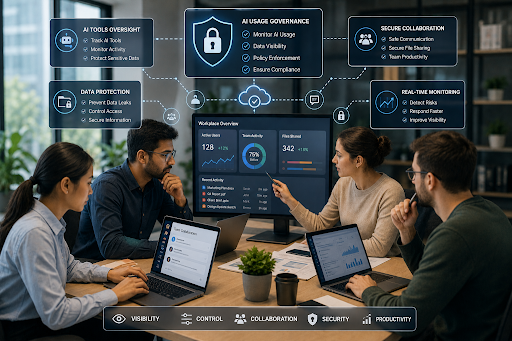
As companies continue adopting intelligent workplace technologies, many are realizing that productivity alone is not enough. Businesses also need clear oversight into how these systems are being used, what information employees are sharing, and how digital collaboration impacts security and compliance.
This growing need for visibility has increased interest in solutions focused on ai usage governance and secure workplace collaboration platforms.
Why Is AI Oversight Becoming More Important?
Modern businesses rely heavily on digital tools to support communication, document sharing, customer interaction, and internal collaboration. Employees often use AI-powered assistants to generate content, summarize meetings, analyze information, or automate repetitive tasks.
However, without proper oversight, organizations may struggle to understand:
- Which AI tools employees are using
- What sensitive data is being shared
- Whether company policies are being followed
- How external tools access internal information
- If workplace communication remains secure
Even well-intentioned employees can accidentally expose confidential data when using external platforms or connected applications without proper safeguards.
For example, a team member using a public AI assistant to summarize client information could unintentionally share sensitive company details outside approved systems.
This is why businesses are now focusing on stronger governance strategies that improve visibility while supporting safe technology adoption.
How Does Workplace Collaboration Impact Security?
Modern businesses depend on collaboration platforms for messaging, meetings, file sharing, and project management. These tools help teams stay connected across different locations and departments. However, increased digital collaboration also expands potential security risks.
As communication moves across multiple platforms, businesses need better ways to monitor activity, manage permissions, and maintain secure workflows.
This is where solutions connected to teams team management software are becoming increasingly valuable.
Strong collaboration management tools help organizations:
- Improve communication visibility
- Manage employee access permissions
- Support secure file sharing
- Monitor workplace activity
- Reduce unauthorized access risks
- Improve operational organization
Businesses that rely on remote teams or hybrid work environments especially benefit from stronger collaboration oversight and centralized management systems.
What Problems Can Poor Governance Create?
Without clear oversight, organizations may experience several operational and security challenges that affect productivity and data protection.
Data Exposure Risks
Employees may unknowingly share confidential business information through external tools or unsecured communication channels.
Limited Visibility
Businesses often struggle to track how intelligent tools interact with company systems or sensitive information.
Compliance Challenges
Industries with strict regulations require stronger monitoring and reporting capabilities to maintain compliance standards.
Operational Confusion
Disconnected workplace tools can create communication gaps, inconsistent workflows, and difficulty managing team activity.
Increased Security Concerns
Unauthorized access, suspicious behavior, and unmanaged integrations can expose organizations to unnecessary risks.
As businesses continue expanding their use of workplace technologies, governance and collaboration management become essential for maintaining secure and organized operations.
How Can Real-Time Monitoring Improve Workplace Management?
Traditional monitoring methods often rely on delayed reports or manual reviews. This approach makes it difficult for organizations to identify problems before they affect operations.
Real-time monitoring provides businesses with continuous visibility into workplace activity, connected systems, and communication environments.
This approach helps organizations:
Detect Unusual Activity Faster
Continuous monitoring allows businesses to identify suspicious behavior earlier and respond before problems escalate.
Improve Operational Awareness
Organizations gain better insight into employee activity, communication patterns, and technology usage across departments.
Support Safer Collaboration
Monitoring tools help maintain secure communication and reduce risks associated with unauthorized access or unsafe sharing practices.
Strengthen Governance Policies
Businesses can apply consistent rules and oversight across connected systems while maintaining accountability.
Companies using intelligent workplace technologies require better visibility to support productivity without compromising operational security.
Why Are Businesses Investing in Smarter Workplace Management?
The growth of remote work, cloud platforms, and connected technologies has changed how teams collaborate. Businesses are no longer operating within a single office environment. Employees now communicate across devices, applications, and external systems throughout the workday.
As digital operations become more complex, organizations require stronger management strategies that support both productivity and security.
Businesses are investing in smarter workplace management solutions because they help:
- Simplify collaboration processes
- Improve operational visibility
- Support secure communication
- Reduce workflow disruptions
- Maintain stronger access controls
- Improve overall team coordination
Solutions from companies like AGAT Software help organizations improve visibility, strengthen governance, and maintain safer digital workplace environments without interrupting daily operations.
What Should Organizations Look for in Workplace Governance Solutions?
Choosing the right governance and collaboration management strategy is important for long-term operational success. Businesses should focus on solutions that offer flexibility, visibility, and strong security support.
Important features may include:
- Real-time monitoring capabilities
- Activity tracking and reporting
- Access management controls
- Secure communication oversight
- Policy enforcement tools
- Scalable management systems
- Integration support across platforms
Organizations should also prioritize solutions that support productivity and employee collaboration instead of creating unnecessary complexity.
Conclusion
Modern businesses depend heavily on connected technologies, digital collaboration platforms, and intelligent workplace tools to maintain productivity and efficiency. However, increased technology adoption also creates growing concerns around visibility, communication security, and operational control.
Organizations now require stronger governance strategies and better collaboration management solutions to maintain secure and organized digital environments. Real-time monitoring, centralized oversight, and safer communication processes help businesses reduce risks while supporting efficient workplace operations.
As digital workplaces continue evolving, companies that invest in smarter governance and collaboration management will be better prepared to maintain secure, productive, and well-organized business environments.
FAQs
1. Why is workplace AI governance important?
Governance helps businesses monitor how intelligent tools are used, protect sensitive information, and maintain stronger operational visibility across workplace systems.
2. How can collaboration management tools improve security?
These tools help organizations manage communication, monitor activity, control access permissions, and support safer file sharing across teams.
3. What risks can unmanaged workplace tools create?
Unmanaged tools may increase risks related to unauthorized access, data exposure, communication gaps, and compliance issues.
4. Why is real-time monitoring valuable for businesses?
Real-time monitoring helps organizations detect unusual activity quickly, improve operational awareness, and maintain stronger oversight across digital environments.
5. What should businesses consider when choosing governance solutions?
Businesses should look for visibility, access controls, monitoring capabilities, reporting features, scalability, and support for secure collaboration across workplace systems.